
Sustainability
Most event sustainability is claimed. Very little of it is measured.
An event gets declared carbon neutral because an offset was bought, and nobody asks what the underlying footprint was or how it was calculated. We do the reducible things first, measure what remains, and report it as what it is.
Where the impact actually is
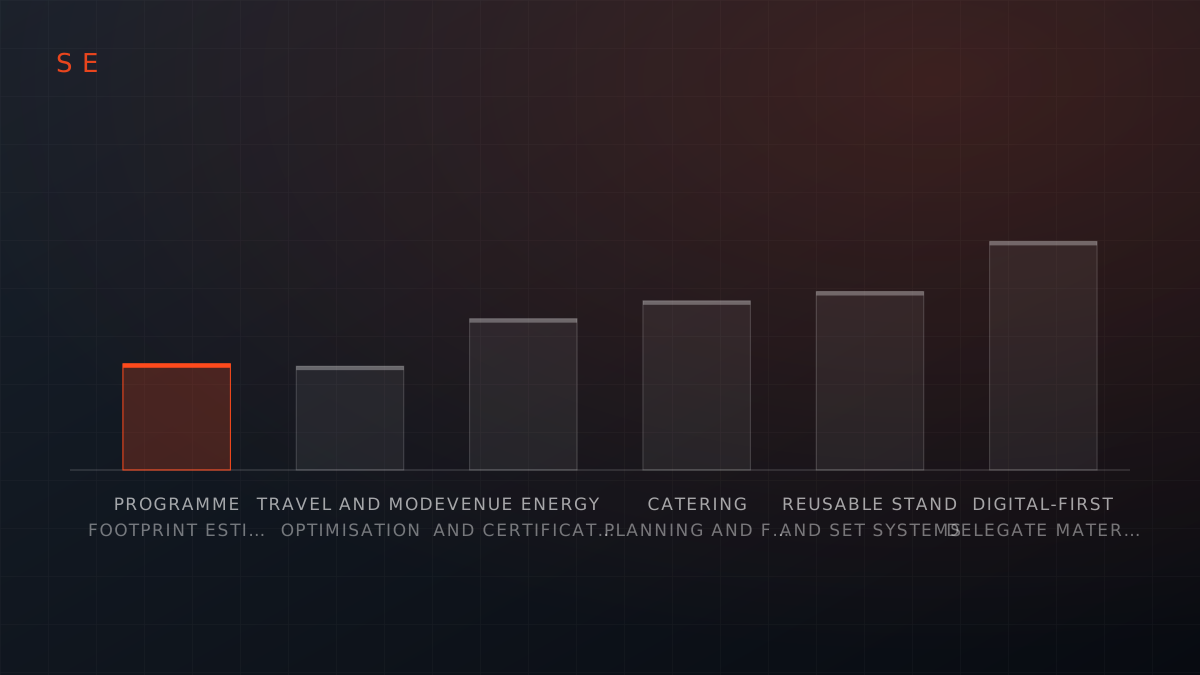
Six levers, in order of size.
Sustainability effort tends to land on the visible things — paper, plastic cups, signage — while the destination decision, which dwarfs all of them, gets made on other grounds entirely. Work the list in order of size.
How we report it
Four commitments about the numbers.
We separate measured from estimated
An ESG team can use a measured number with a stated methodology. They cannot use a claim. Every figure in our reporting is labelled as one or the other.
Offsetting is a separate line
We will not describe an event as carbon neutral because an offset was purchased. If you choose to offset, it appears as its own line, described as what it is, alongside the underlying footprint.
Some choices cost more and some save money
Reusable stands, realistic catering guarantees, digital materials and fewer freight movements reduce cost. Renewable-powered venues, certified caterers and rail over short-haul air sometimes do not. We show both columns rather than averaging them into a claim.
Certification is a certifier’s job
We can run a programme to the ISO 20121 management-system requirements and prepare what an auditor will ask for. We cannot certify it, and an agency that says it can is describing something else.
In practice
What we actually do
- Programme footprint estimate at design stage
- Travel and mode optimisation
- Venue energy and certification review
- Catering planning and food waste reduction
- Reusable stand and set systems
- Digital-first delegate materials
- Local and supplier sourcing policy
- Post-event measurement and reporting
Travel is most of it
For nearly every international programme, delegate travel dominates the footprint. Destination choice, routing, mode and whether the event needs to be in that city at all move the number far more than anything on site. That conversation belongs at the brief, not at close-out.
Catering guarantees, honestly set
Over-ordering is the largest on-site waste stream and the easiest to fix. Realistic guarantees based on actual attendance patterns, plated versus buffet decisions taken with waste in mind, and a surplus redistribution arrangement where the destination supports it.
Build once
A reusable modular stand system with replaceable graphics beats a custom build thrown away after three days on both cost and impact. The same logic applies to set pieces, signage and delegate materials.
Report what was measured
We separate measured data from estimates and label both. An ESG team can use a measured number with a stated methodology; they cannot use a claim.
Questions
The ones worth asking any agency.
One working day · hello@voyacircle.com
Have an ESG reporting obligation? Say so at the brief.
It changes how the whole programme is documented, and retro-fitting the evidence afterwards is considerably harder than collecting it as you go.