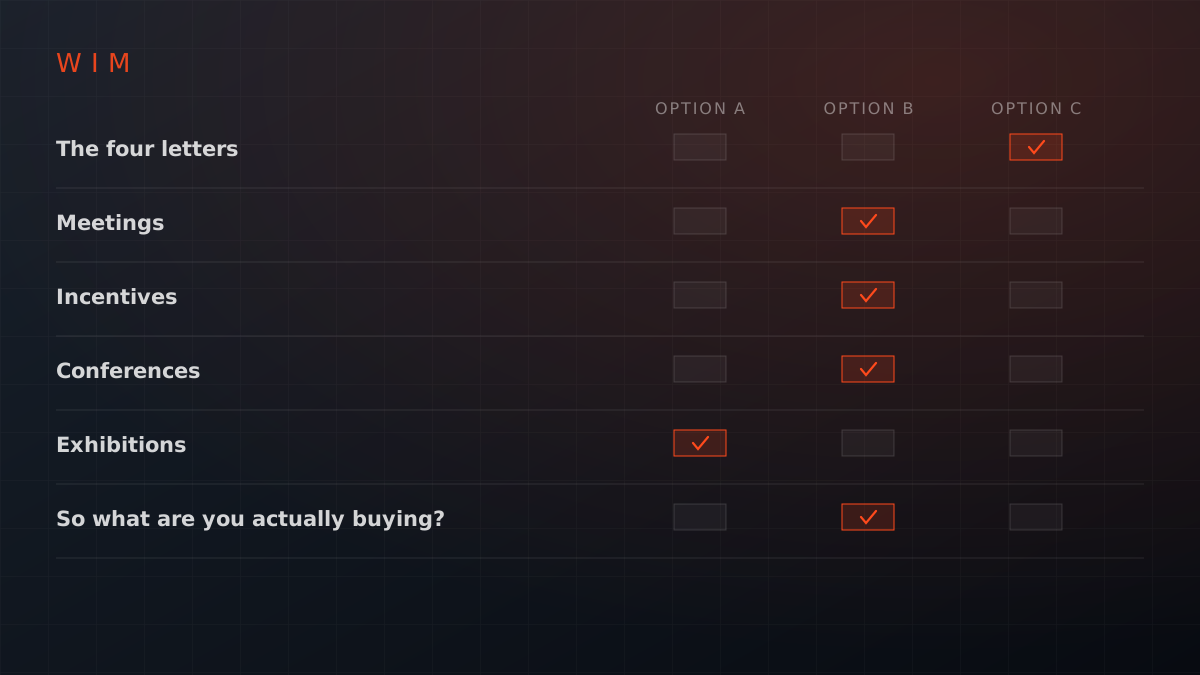
The four letters
MICE stands for Meetings, Incentives, Conferences and Exhibitions. It describes the part of the travel and events industry that serves companies and associations rather than holidaymakers, and it exists as a category because these four formats share a supply chain: venues, hotels, group air, ground transport, production and delegate operations.
They are not, however, the same job. A board meeting for fourteen and a trade show with twenty thousand visitors sit at opposite ends of a spectrum that runs from privacy and pacing at one end to floorplans, freight and lead capture at the other.
Meetings
Small, high-consequence rooms: board retreats, leadership offsites, sales kick-offs, customer advisory boards. The difficulty is concentrated in property selection, discreet arrivals, room design and pacing rather than in scale.
The failure mode is a hotel that sells you a meeting wing it shares with a wedding on Saturday, or an agenda with no gaps in it — because at an offsite, the useful conversations happen in the gaps.
Incentives
Reward travel for people who hit a target: achiever clubs, dealer trips, channel recognition. The trip is the payment on a promise made a year earlier, so it either honours that or quietly devalues next year’s target.
The work is destination fit against the qualifier profile, private access that a public booking cannot buy, and a recognition moment that people repeat to each other afterwards.
Conferences
Multi-day programmes with plenary and breakout content, speakers, sponsors, registration, hotel blocks and several hundred people arriving at once. The operational centre of gravity is the agenda: it decides the floorplan, which decides the technical specification, which decides the budget.
Association congresses add a peer-reviewed programme and a committee, which puts the critical path outside the agency’s control and makes early planning more important, not less.
Exhibitions
Trade shows, expos and pavilions, either as an exhibitor or as the organiser. Exhibitions run on someone else’s calendar — the organiser sets deadlines for space, build height, rigging, freight and health and safety, each with a penalty attached.
Exhibitors do not buy floor space, they buy conversations. Whether a show paid for itself is decided by the meeting diary and the lead handover, not by footfall past the stand.
So what are you actually buying?
A MICE agency should own the programme end to end: writing the brief with you, sourcing and negotiating venues and suppliers, moving people, designing the stage and running order, building registration, managing exhibitors and sponsors, staffing the event and reconciling the final account.
The most useful thing a good one does is earlier than any of that. It tells you when your dates, destination and budget do not work together — before you commit to any of the three.
The short version
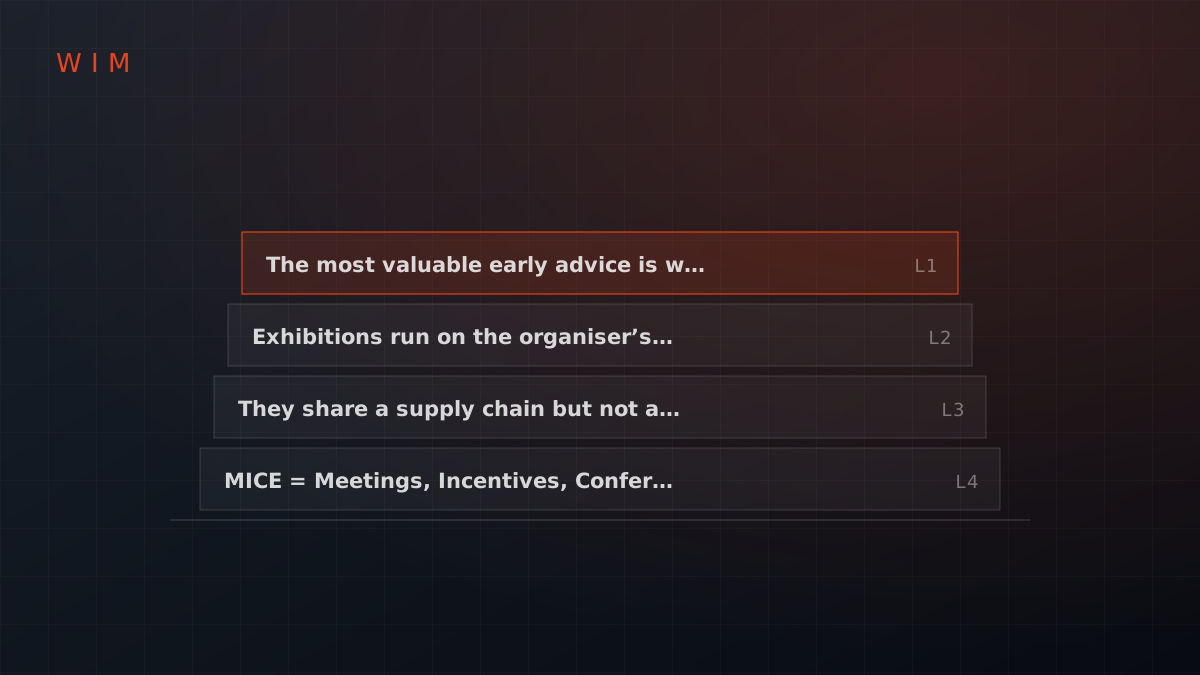
- MICE = Meetings, Incentives, Conferences, Exhibitions
- They share a supply chain but not a method
- Exhibitions run on the organiser’s calendar, not yours
- The most valuable early advice is what will not work